

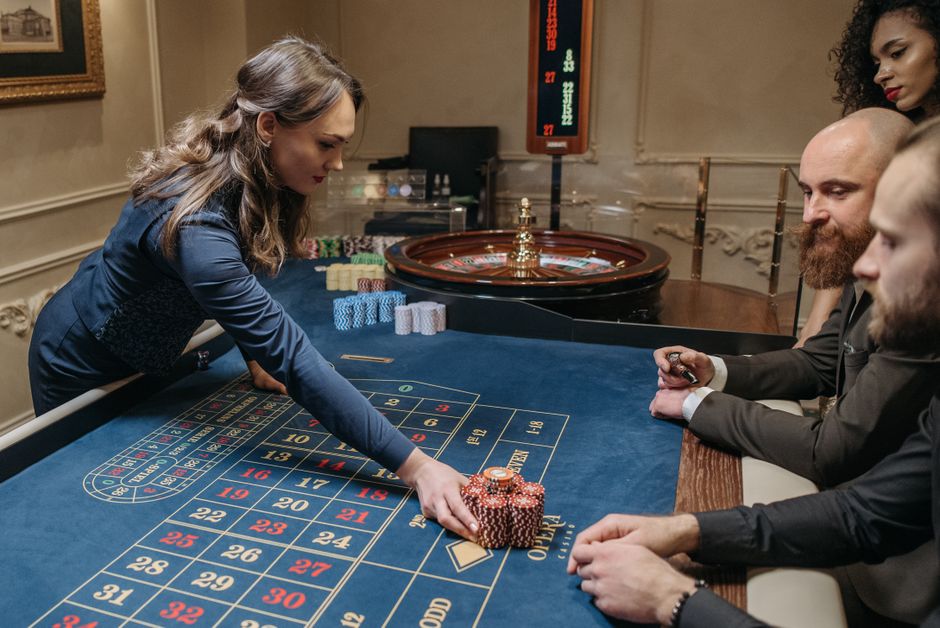
Walk into any casino floor and you'll see two kinds of players. The first jams the spin button like it owes them money, chasing losses with a glazed look. The second sits calmly, tracks what they're doing, and somehow walks away more often than they lose. The gap between these two isn't luck. It's a set of habits, knowledge, and emotional discipline that separates recreational players from the ones who actually last.
Whether you're spinning slots, grinding poker tables, or sweating a football parlay, the fundamentals of smart iGaming don't change much. Let's break down what actually matters.
Understanding House Edge Is Not Optional
Every game in a casino is built on a mathematical edge for the operator. That's not a conspiracy, it's arithmetic. The question is how big that edge is and whether you're playing something with a fighting chance.
Slots typically carry a house edge between 2% and 10%, depending on the game and the casino's configured RTP (Return to Player). A slot with 96% RTP gives back $96 for every $100 wagered over millions of spins. Blackjack played with basic strategy? The edge can drop to around 0.5%. Baccarat's banker bet sits near 1.06%. Poker is completely different because you're playing against other people, not the house, and the only built-in cost is the rake. สล็อตเว็บตรง is a solid starting point for anyone new to this.
If you're going to spend your money somewhere, spend it where the math doesn't bury you. This single shift in thinking changes everything.
Slot Strategy: Myths Versus Reality
Let's kill some nonsense right away. There is no button-pressing pattern, no lucky spin rhythm, and no time of day that makes a slot machine more likely to pay. Random Number Generators don't care about your feelings.
What does matter:
- Volatility matters more than RTP for your session. A high-volatility slot with 96% RTP might eat 300 spins before a single bonus. A low-volatility game with 95% RTP pays smaller but more often. Match the game to your bankroll, not your mood.
- Bonus buy features are a math problem, not a shortcut. A feature that costs 100x your bet usually returns around 95-97x on average. You're paying a premium for variance, not value.
- Max bet isn't always smart. Many progressive jackpots only trigger on max bet, but that's a lottery ticket attached to your spins. Know if you're buying it.
- Session limits save more players than hot streaks. Set a loss limit before you start and treat it like a wall, not a suggestion.
Concrete example: If you have a $200 bankroll and the slot has a minimum bet of $0.50, that's 400 spins. At 500 spins per hour, you'll be done in under an hour on a bad run. Drop your bet to $0.20 and you extend the session fivefold. More spins equals more chances at the bonus, and more entertainment for the same money.
Poker: Where the Real Edge Lives
Poker is the only game in the casino where a skilled player can consistently win. That's exactly why it's harder than it looks.
The biggest leak for most beginners is playing too many hands. In a full-ring Texas Hold'em game, a tight player might see 15-20% of flops. A loose player sees 40%+. The loose player is bleeding chips on marginal hands that look pretty but lose money long term.
Position is the second pillar. Acting last gives you information. You see what everyone else does before you commit. A mediocre hand in late position can be more profitable than a strong hand in early position, simply because of the info advantage.
Bankroll management is the third. A common rule for cash games is 20 buy-ins for the stake you're playing. If you're at $1/$2 with a $200 max buy-in, you want around $4,000 dedicated to poker. Anything less and one bad session forces you to play scared, which is the fastest way to lose.
Sports Betting: Lines, Value, and Discipline
Betting on sports feels like knowledge, but it's really about pricing. The sportsbook sets a line, and your job is to decide if it's wrong.
A team at -150 means you need to win 60% of the time to break even. A team at +200 only needs 33.3%. If your handicapping says a +200 underdog actually wins 40% of the time, that's value, even if the bet loses tonight. Value betting is about the long run, not the final score.
Practical steps for smarter betting:
- Track every bet. Spreadsheet, app, whatever. If you don't know your win rate, you don't know if you're good.
- Shop lines. The difference between -110 and -105 on the same game is real money over hundreds of bets.
- Avoid parlays as your default. They multiply the house edge with every leg. A 4-leg parlay at standard odds carries roughly a 10-20% effective edge for the book depending on the sport.
- Never bet on your favorite team with your heart. Emotional bets are the most expensive kind.
Mental Game: The Skill Nobody Talks About
Tilt destroys more bankrolls than bad beats. Tilt is the state where you stop playing your strategy and start playing your emotions. It happens after a bad loss, a long dry spell, or a string of suckouts in poker.
Signs you're on tilt:
- Bet sizes jumping without reason
- Chasing losses with bigger stakes
- Playing hands or games you normally avoid
- Feeling angry at the software, the dealer, or the random number generator
The fix is mechanical. Walk away for 15 minutes. Close the laptop. Drink water. The games will be there tomorrow and the math won't change. The only thing that changes when you tilt is your ability to make good decisions, and that's the entire game.
Also worth saying: bonuses and promotions are marketing, not free money. A 100% deposit match with 40x wagering requirements means you'd need to bet $4,000 to clear a $100 bonus. That's not a gift, that's a contract. Read the terms before you celebrate.
The Long View
Nobody beats the casino at its own game forever. The house edge guarantees that. What you can do is play games where your skill reduces that edge, manage your money like it matters, and treat every session as entertainment with a defined cost, not an income strategy.
The players who last are the ones who understood early that the goal isn't to win every night. It's to still be in the game, with money in your pocket and your head clear, six months from now. That's the only scoreboard that counts.


Coding is used in almost all aspects of life and work now, be it directly or indirectly. It’s not just for companies in the tech sector. “An increasing number of businesses rely on computer code,
Coding is used in almost all aspects of life and work now, be it directly or indirectly. It’s not just for companies in the tech sector. “An increasing number of businesses rely on computer code,
Coding is used in almost all aspects of life and work now, be it directly or indirectly. It’s not just for companies in the tech sector. “An increasing number of businesses rely on computer code,