

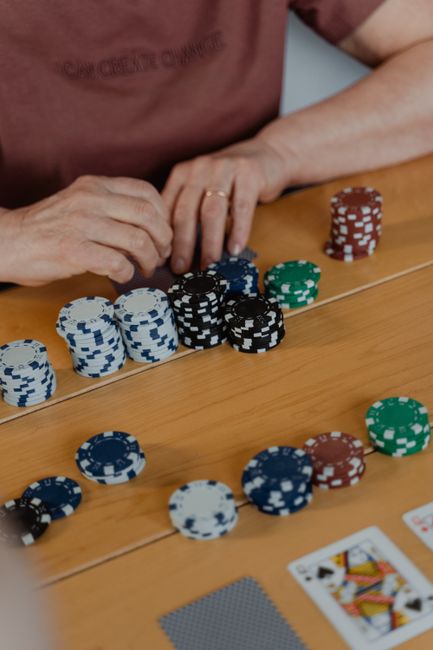
Every gambler has heard the phrase. The house always wins. It is the smug mantra of pit bosses, the grim punchline to a thousand bad beats, and, mathematically speaking, it is true over an infinite timeline. But here is the thing nobody tells you when you are firing up a slot machine at 2 a.m. or calling a river bet with second pair: the house edge is not a guarantee that you will lose tonight. It is a slow tax. Understanding the difference between the edge and your actual session is the single most important intellectual leap a player can make.
Let's break down how this actually works across slots, table games, poker, and sports betting—and how you can use that knowledge to be sharper, calmer, and possibly even profitable.
Slots: The Tax You Pay for the Dream
Slot machines are the engine of the casino floor. In Las Vegas, they routinely generate 60–80% of total gaming revenue. That dominance is not an accident. Slots are fast, solitary, and mathematically brutal. Some of the clearest guidance on this comes from สล็อตเว็บตรง.
The house edge on a typical Vegas slot sits between 2% and 10%, depending on the machine and jurisdiction. A 5% edge means that for every $100 you cycle through the machine, the casino expects to keep $5 over the long run. But here is the nuance that matters: that 5% is calculated over millions of spins, not your 200-spin session. In a single session, variance is monstrous. You might hit a 500x jackpot on your tenth spin and walk away a winner. You might feed the machine for two hours and never see a bonus. Both outcomes are fully compatible with the same underlying math.
- RTP (Return to Player): A 96% RTP slot has a 4% house edge. A 92% RTP slot has an 8% edge. That 4% difference sounds small, but over thousands of spins it is the difference between a decent session and a bloodbath.
- Volatility matters more than RTP for your experience. Low-volatility slots pay small amounts frequently. High-volatility slots pay rare, massive sums. Your bankroll needs to match the volatility, not just the RTP.
- Stop-losses are psychological tools, not mathematical ones. The machine does not know you have a $200 stop-loss. But setting one protects you from the sunk-cost spiral that turns a fun evening into a rent-money disaster.
Actionable tip: If you want to maximize playtime on a fixed budget, pick low-volatility slots with RTP above 96%. If you are chasing a big score, accept that you are buying a lottery ticket with better odds and a shorter lifespan for your bankroll.
Table Games: Where Skill Actually Shrinks the Edge
Blackjack is the only common table game where a skilled player can get the house edge below 1%, and with advanced card counting, briefly flip the edge in their favor. But let's be realistic: most players do not count cards, and casinos actively discourage it. That said, basic strategy—the mathematically optimal way to play every hand—cuts the house edge from roughly 2% to 0.5% on a typical 3:2 blackjack table.
Compare that to roulette. A double-zero American wheel carries a 5.26% house edge on every bet. A single-zero European wheel drops it to 2.70%. That is a massive difference for the same game. If you are going to play roulette, always choose the European wheel. It is not close.
Craps is another game where the edge varies wildly by bet. The pass line bet has a 1.41% house edge. The hardways? 9–11%. The proposition bets in the middle of the table? Up to 16.67%. The dice do not care, but your bankroll does.
Poker is the great exception. In poker, you are not playing against the house—you are playing against other players, and the house takes a rake. A skilled poker player can achieve a positive expected value over thousands of hands. But that skill gap is real and unforgiving. The difference between a winning and losing poker player is not luck over a session; it is decision quality over a lifetime. If you cannot identify the fish at the table within 20 minutes, it is you.
Sports Betting: The Line Is the Edge
Sports betting has exploded in the US since the Supreme Court struck down PASPA in 2018. But the math has not changed. A standard -110 line on both sides of a spread means you need to win 52.38% of your bets just to break even. That is the bookmaker's edge, and it is baked into every line.
Sharp bettors hunt for soft lines, arbitrage opportunities, and promotional bonuses that temporarily erase the vig. But the vast majority of recreational bettors lose over time, not because they are stupid, but because the math is stacked against them and they do not shop for the best line.
- Always compare lines across at least three sportsbooks. A half-point difference on an NFL spread can be the difference between a push and a win.
- Understand closing line value (CLV). If you consistently bet numbers better than the closing line, you are likely a winning bettor over the long run, even if a given weekend goes badly.
- Parleys and teasers are not clever strategies. They are lottery tickets with worse odds than you think. The house edge on a three-team parlay is often above 10%.
Bankroll Management: The Unsexy Superpower
You can memorize every basic strategy chart and still go broke if you bet outside your means. Bankroll management is not a trick. It is the foundation. A simple framework: never bet more than 1–2% of your total gambling bankroll on a single bet, and never gamble with money you cannot afford to lose entirely.
Here is a concrete example. If your bankroll is $500, your standard bet should be $5–$10. That feels boring. It is supposed to. Boring bankroll management keeps you in the game long enough for variance to work in your favor, or at least not annihilate you on a Tuesday night.
The Emotional Trap: Why We Chase
The house edge is not the only thing working against you. Your own brain is. The near-miss effect—when a slot reel stops one symbol short of a jackpot—triggers the same dopamine pathways as an actual win. Casinos know this. That is why slot machines are designed with frequent near-misses and flashing lights. It is not paranoia; it is neuroscience.
Recognize the chase when it happens. If you are increasing your bet size to recover losses, you have already lost control. The best players, whether in poker or sports betting, treat losses as the cost of doing business. They do not double down emotionally.
The Bottom Line
The house always wins over an infinite number of hands, spins, and bets. But you are not playing infinitely. You are playing a finite session with a finite bankroll. The edge is real, but variance is realer in the short run. Your job is not to beat the math forever. Your job is to understand the math well enough to make smart decisions, manage your money, and walk away when the fun stops. That is not a losing philosophy. That is the only winning one.


Coding is used in almost all aspects of life and work now, be it directly or indirectly. It’s not just for companies in the tech sector. “An increasing number of businesses rely on computer code,
Coding is used in almost all aspects of life and work now, be it directly or indirectly. It’s not just for companies in the tech sector. “An increasing number of businesses rely on computer code,
Coding is used in almost all aspects of life and work now, be it directly or indirectly. It’s not just for companies in the tech sector. “An increasing number of businesses rely on computer code,